
Four Barrels: The Fuel Crisis & Missionary Aviation
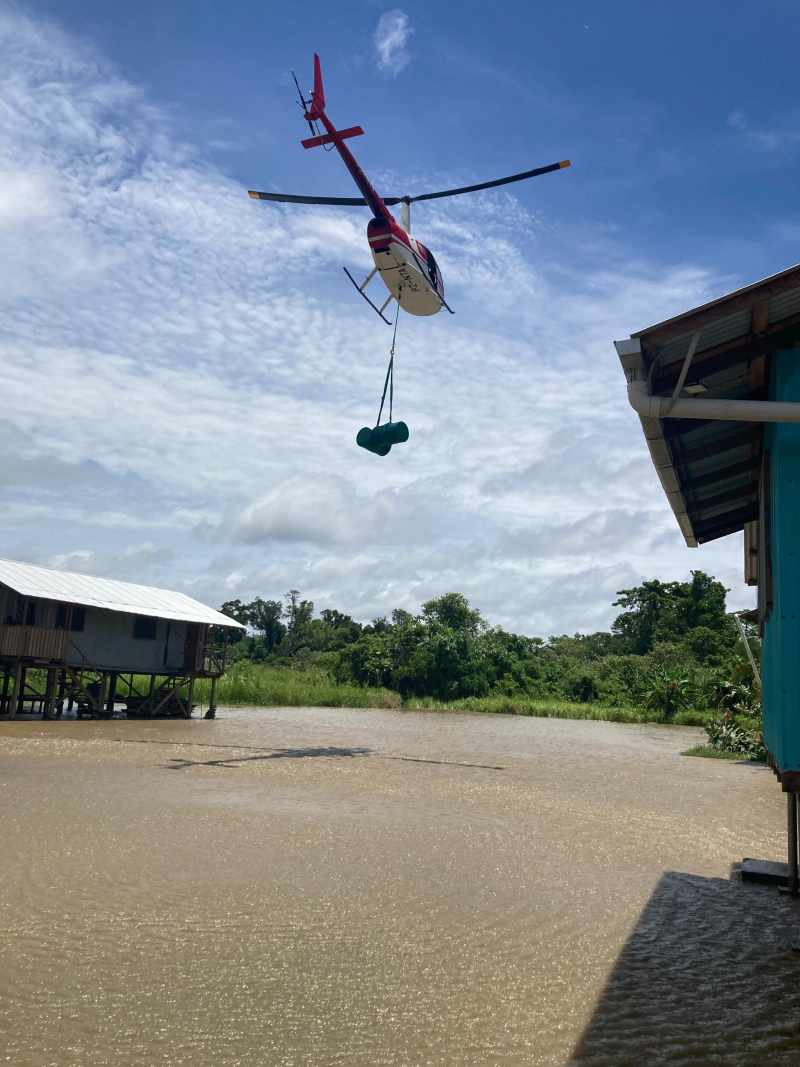
Four barrels being sling-loaded from flooded Iski. To the left is the Iski church building - built on stilts.
Four fuel barrels floated through floodwater in an Iski village as church elders guided them upstream by canoe. Ethnos360 Aviation missionaries Stuart Sims and David Stobbe arrived in an R66 helicopter, preparing to lift the drums into the mountains of Papua New Guinea.
The barrels had already traveled hundreds of miles.
Delayed by nationwide fuel shortages, they were first transported by truck from the coast. When damaged roads and broken bridges halted ground travel, the barrels were transferred to boats along the Ramu River and sent downstream toward Iski.
But the journey still wasn’t finished.
Heavy flooding had swallowed much of the village by the time Stuart and David arrived. Church elders from Iski stepped into the swollen river and paddled the barrels upstream by canoe. Two weeks after the barrels arrived in Iski, David stood ankle-deep in muddy floodwater and spent hours attaching each drum beneath Stuart in the hovering aircraft as the helicopter blades thundered overhead.
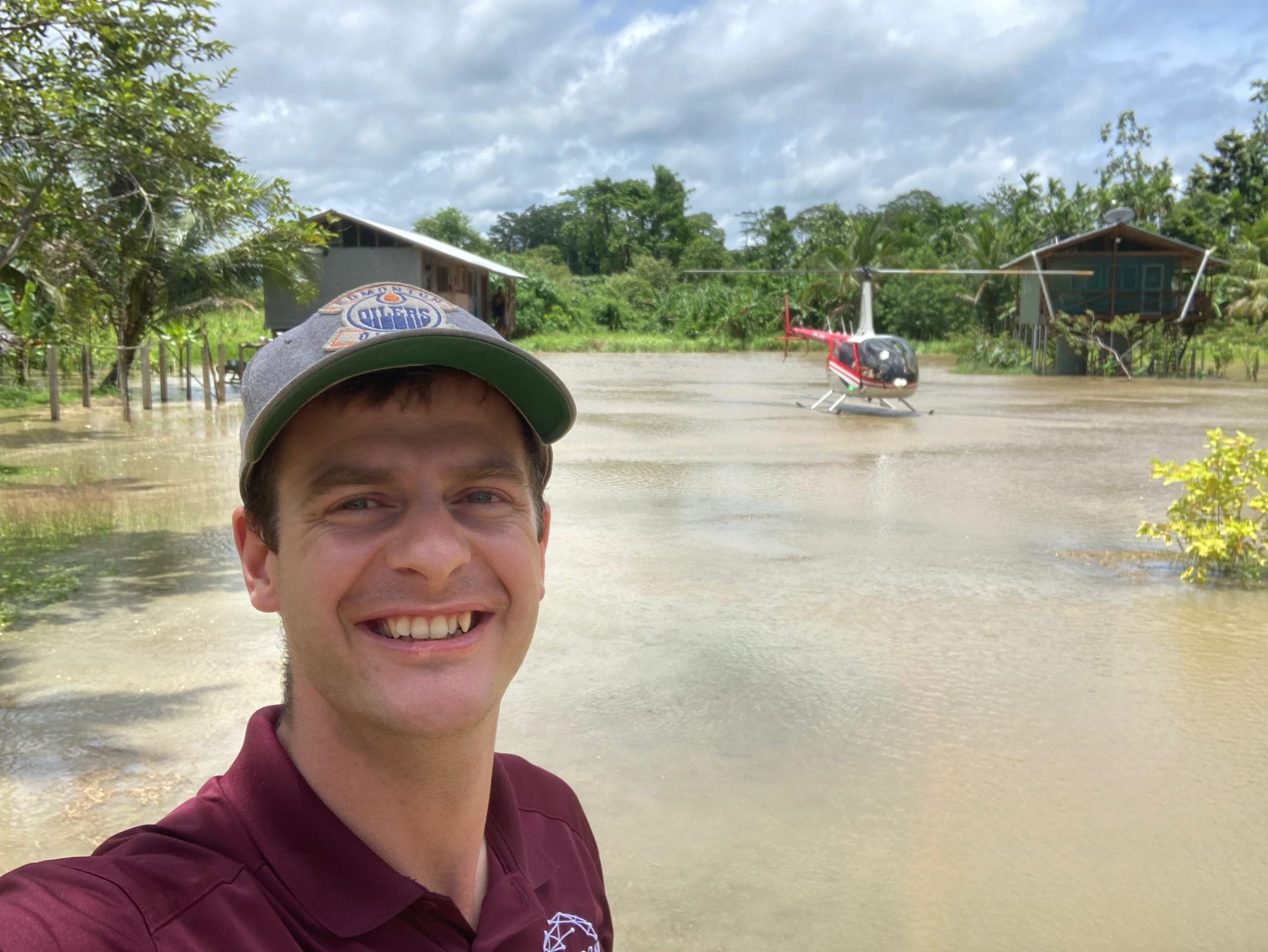
David Stobbe
One by one, the barrels lifted into the air and disappeared toward the mountains.
To many, fuel shortages mean higher ticket prices or delayed vacations. In Papua New Guinea, they can determine whether missionaries remain supplied, whether isolated churches stay connected, and whether Scripture reaches people still waiting to read God’s Word in their own language.
That day’s fuel delivery helped support ministry in remote villages where aviation is often the only practical access.
Missionaries have spent years serving among the Inapang people of Papua New Guinea, helping develop literacy materials and translated Scripture portions for new readers. Without aviation, even basic supplies become extraordinarily difficult to move through the swamps, rivers, and mountains of the region.
Recently, a helicopter delivered a small box of Scripture portions in the Inapang language directly to their village. Inside were reading materials for 33 children who had just learned to read. For many of them, it was the first book they had ever owned.
Now those children are reading portions of Scripture in their own language, including the birth of Christ from the Gospel of Luke.
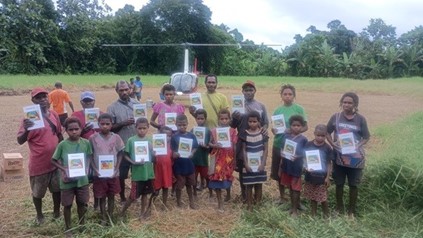
Inapang children and adults with their new books in their mother tongue.
Moments like that are only possible because aviation continues to bridge the gap between remote villages and the resources needed to sustain church planting, Bible translation, literacy, and discipleship ministries.
Your support for Missionary Flight Sponsorship helps make those flights possible.
Missionaries serving in remote locations receive critical flight assistance that keeps ministry moving forward despite rising fuel costs and logistical challenges. Every sponsored flight helps deliver supplies, transport personnel, encourage isolated believers, and support the spread of the gospel in places difficult to reach by any other means.
In Papua New Guinea, mountains still isolate villages. Rivers still flood. Roads still fail.
But when believers like you continue to pray, give, and invest in Missionary Flight Sponsorship, aircraft still lift off. And each flight carries far more than fuel or cargo. It carries the ongoing work of the gospel to people still waiting to hear and read God’s Word for themselves.