
What if ...?
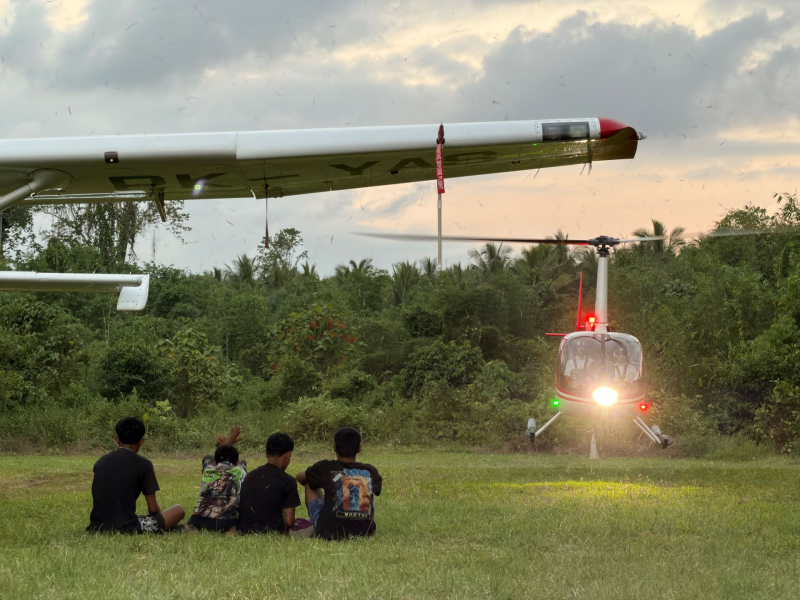
The R66 and Kodiak worked together for this island survey.
“We don’t want these places to be ‘outreaches’ forever,” wrote Payton Downing. “We want to establish the believers enough to stand on their own so we can call them ‘churches.’”
Payton and his wife, Grace, along with Greg and Kadie Ried, work on an island in Indonesia, trying to bolster a church that was established decades ago. When the original missionaries moved on for various reasons, the believers eventually struggled to thrive.
Now, with Downings walking alongside established believers, the church is gaining momentum, even reaching out to distant villages. But those villages are far enough away that consistent teaching and discipleship are difficult. Getting to them is just plain hard.
During four to six months of the year, rainy season makes travel through the mountains a “non-option.” “Motorbikes aren’t impossible, but the muddy trails make it even more treacherous – and it’s a gamble on how smoothly they can cross the three rivers,” explained Payton. “And going by boat around the island is very sketchy due to the waves.”
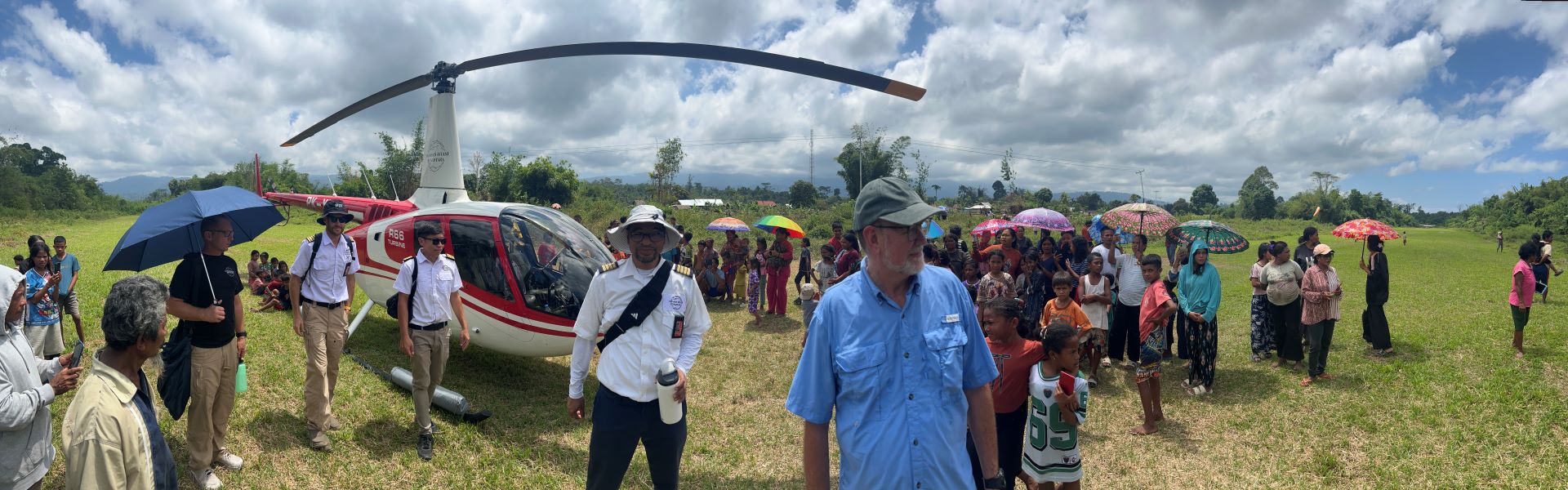
Chief helicopter pilot Brian Pruett (with umbrella) arrived from the USA to join pilots Nathan Willems, Reuel Yeow and Nomad Nelman. Mechanic Evan Garrett’s dad (blue shirt), visiting at the time, got to witness this unusual day on the island.
Well, wouldn’t it be better in dry season? Even then, hiking the thick jungle of the mountain trail would mean over-nighting in the bush and basically carrying no supplies. Motorbiking around the coastline still means two days, crossing three rivers, enduring the inevitable accidents and breakdowns, and carrying only the supplies that would fit in a backpack. What about the boat around the coastline? That involves several days of waiting for the right boats, carrying limited baggage – and then finding a way of getting the baggage from the coast to the village.
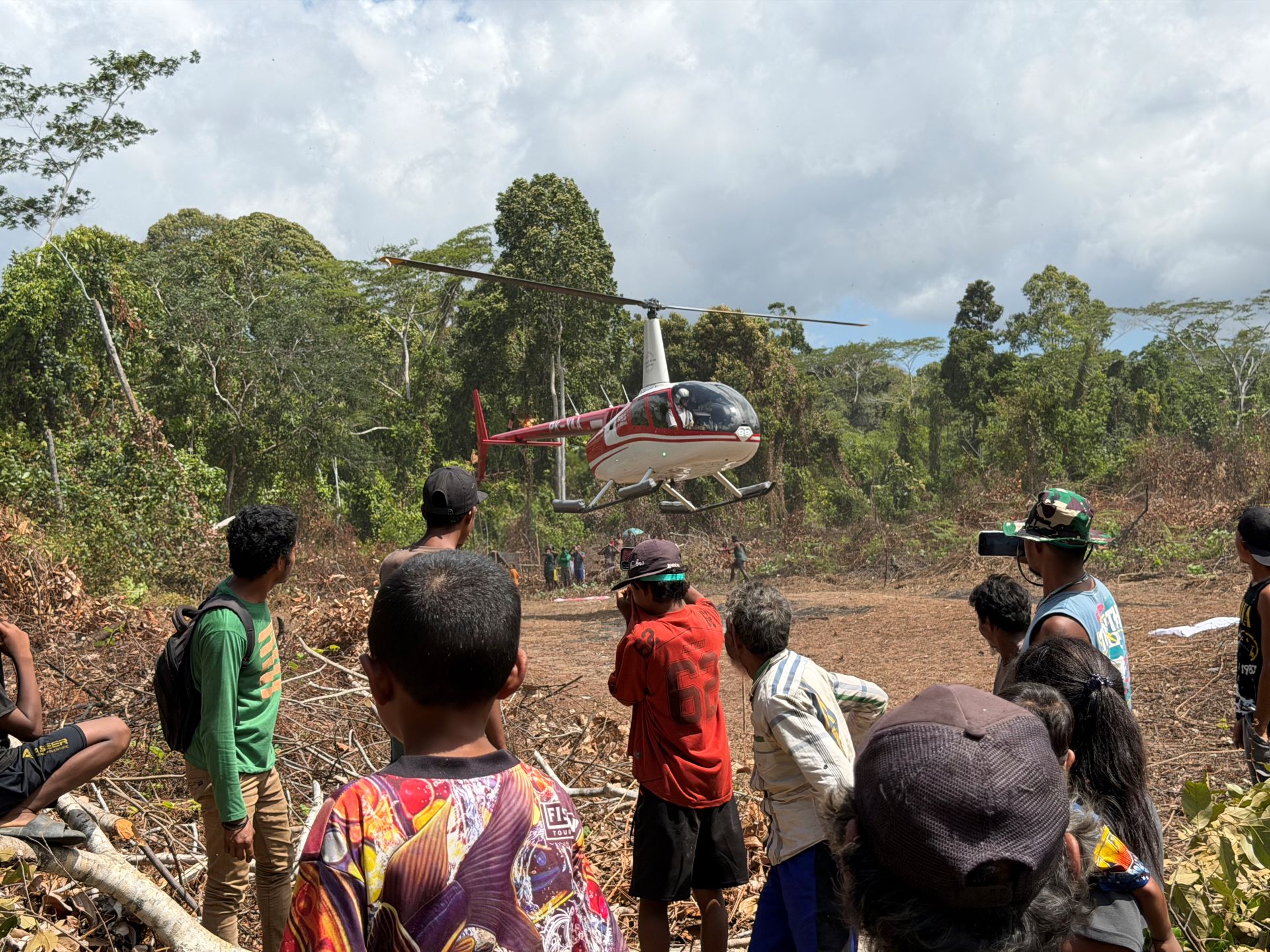
Villagers thrilled to see the R66 up close.
Payton had an idea: “I think if the airplane becomes an option, a husband/wife team (or two) from the village where we serve could commit to maybe six weeks at a time between flights to help out these outreaches. Plus, maybe even the current families ministering there could come back here for some rest and reprieve.”
Making grand plans isn't new. Paul Fleming, founder of Ethnos360 (then New Tribes Mission) said, “Missionary work, which should be the most aggressive, most forceful and determined effort of the church of Jesus Christ, is often in the horse and buggy stage just because we do not have the courage to use what is available in our day to hasten the advance of the Gospel in the remote, untouched parts of the world.”
So, in an aggressive effort, the aviation team showed up on the island. Nomad Nelman brought the Kodiak airplane – which normally serves the Downings. R66 pilots Nathan Willems, Reuel Yeow and Brian Pruett flew the helicopter to the limits of its range. Aviation maintenance specialist Evan Garrett came along with a high-level tool (penetrometer) he had made to measure the firmness of the ground.
With rough helicopter landing pads cleared in three villages, the team set out to survey if airstrips were feasible. They found dense jungle, thick vegetation, towering and rough terrain. Yet in two of the locations, heavy equipment could possibly be available due to mining or other work in the area. In the end, the “what if’s” turned into “just maybe’s.” Would the government be interested in helping this island by building airstrips? Who would have the expertise to write a proposal? Should the church there make the appeal? A lot of hopes are raised. Local men are already started to clear jungle. The process could be long and drawn out – OR God could move mountains!
Those who donate to Missionary Flight Sponsorship, help turn the “what if’s” into “aggressive, forceful and determined effort” to reach remote groups with the gospel. Thank you for contributing and praying so that flight service can be an available and affordable tool.